Mahout
The traditional Thai term for an elephant caretaker or handler. Many mahouts have worked with the same elephant for years or even decades, and in ethical sanctuaries their role has shifted from ride-guide to full-time carer — feeding, monitoring health, and staying close to the elephant they know best.
Free Contact vs. Protected Contact
Two different approaches to how humans and elephants share space. In free contact, mahouts and elephants interact without a barrier, relying on trust built over years. In protected contact, a barrier separates guests and staff from the elephant at all times. Reputable sanctuaries choose whichever approach keeps both elephants and people safest, and are upfront about which one they use.
Bullhook (Ankus)
A hooked tool historically used to direct or discipline elephants, often through pain. Its use is one of the clearest markers of an unethical operation — a genuine sanctuary will not use one at any point, including out of sight of guests.
Rescue Elephant
An elephant that has been retired from logging, street begging, riding camps, or performance venues and now lives at a sanctuary instead. Most rescue elephants carry physical or behavioral effects from their previous work, which is part of why lifetime care — not just a few years — matters so much.
Herd Dynamics
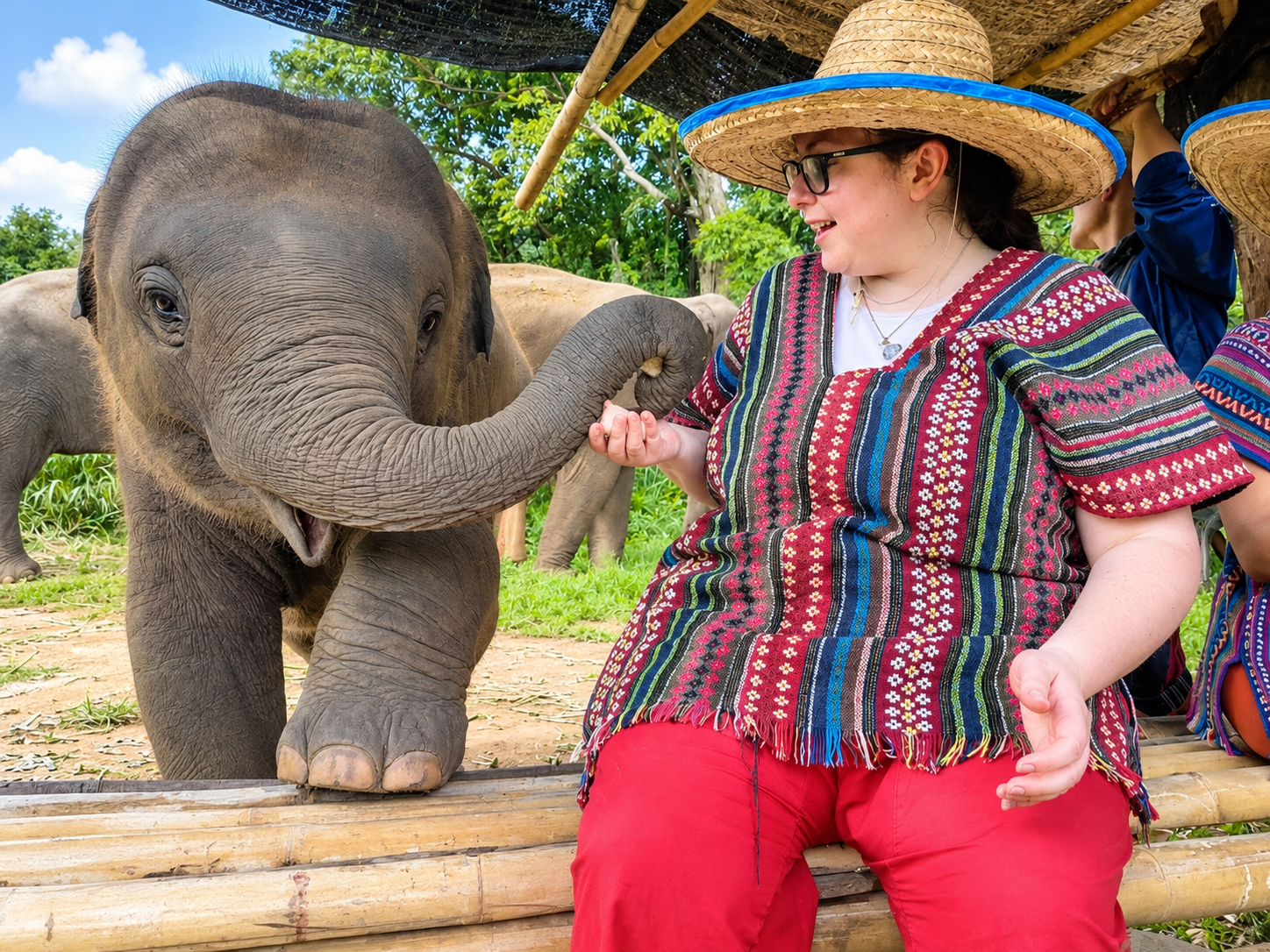
Elephants are deeply social, and sanctuaries that group rescued elephants thoughtfully — considering age, temperament, and past relationships — tend to see calmer, more natural behavior. You may notice elephants forming close bonds with one or two others in the group; that's a good sign, not a coincidence.
Observation-Based Visit
A visit structured around watching and gently interacting with elephants on their own terms, rather than commanding them to perform. It's the model most ethical sanctuaries in Chiang Mai now use for guest programs.
